Why Most Basketball Teams Don’t Use Their Game Film Properly (And How to Fix It)
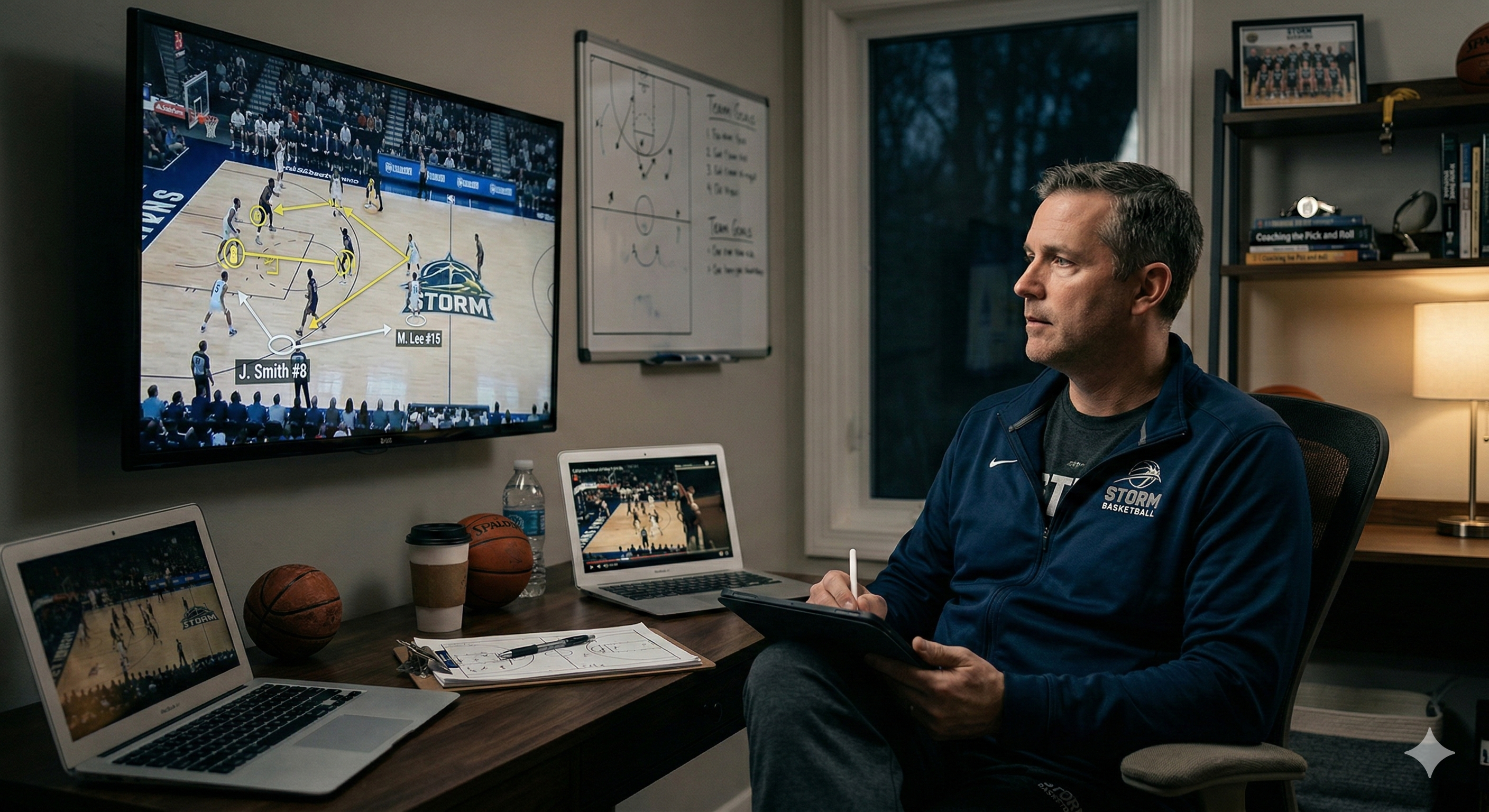
Game film is one of the most powerful tools in modern basketball. From youth teams to professional programs, recording games has become standard practice.
Yet most teams fail to use their game film effectively.
They watch it. They discuss it. They replay key moments.
But they rarely extract structured insights that lead to measurable improvement.
This article explains why that happens — and what to do instead.
1. Watching Film Is Not the Same as Analyzing Film
Many coaches believe they are “doing film work” simply because they rewatch games.
However, there is a critical difference between reviewing and analyzing.
Reviewing means:
- Rewatching possessions
- Pausing and commenting
- Pointing out mistakes
Analyzing means:
- Tagging possessions
- Categorizing actions
- Tracking frequency
- Identifying patterns over time
Without structure, film sessions become reactive rather than strategic.
2. The Main Problem: Lack of a Defined Framework
Most teams never define what they are looking for before they press play.
Questions like:
- What counts as a successful defensive possession?
- How do we define shot quality?
- What is our transition defense metric?
…are rarely answered in advance.
Without predefined categories, coaches rely on feeling rather than data.
And feelings change depending on the result of the game.
3. Why Coaches Don’t Systematize Film Analysis
There are three common reasons:
A. Time Constraints
Tagging a full game manually can feel overwhelming.
B. No Clear System
Many teams don’t know what they should track.
C. No Easy Tool
Spreadsheets are clunky. Manual notes don’t scale.
As a result, teams fall back to simple video review.
4. What Proper Film Usage Actually Looks Like
Using game film properly means turning video into structured data.
At minimum, teams should track:
- Possession outcomes
- Shot type and location
- Turnover type
- Pick-and-roll coverage
- Transition possessions (offense & defense)
Once tagged, patterns become visible:
- Are we scoring more in early offense?
- Which lineup gives up the most corner threes?
- Does our defensive efficiency drop after timeouts?
These insights cannot be reliably identified by memory alone.
5. The Cost of Not Using Film Properly
When game film isn’t structured:
- Player feedback becomes vague
- Adjustments become emotional
- Development slows
- Staff discussions lack objectivity
Over time, this creates inconsistency in both performance and communication.
6. How to Start Using Film More Effectively
You don’t need to track 50 metrics.
Start with:
- Define 5–8 key performance indicators aligned with your playing philosophy.
- Tag every possession consistently.
- Review trends weekly — not just after losses.
- Share objective data with players.
The goal is not more criticism.
The goal is clarity.
Conclusion
Most basketball teams don’t use their game film properly because they confuse watching with analyzing.
Film becomes powerful only when it is structured.
If you are already spending hours reviewing games, the next step is simple:
Turn observation into measurable insight.
That is where real development begins.